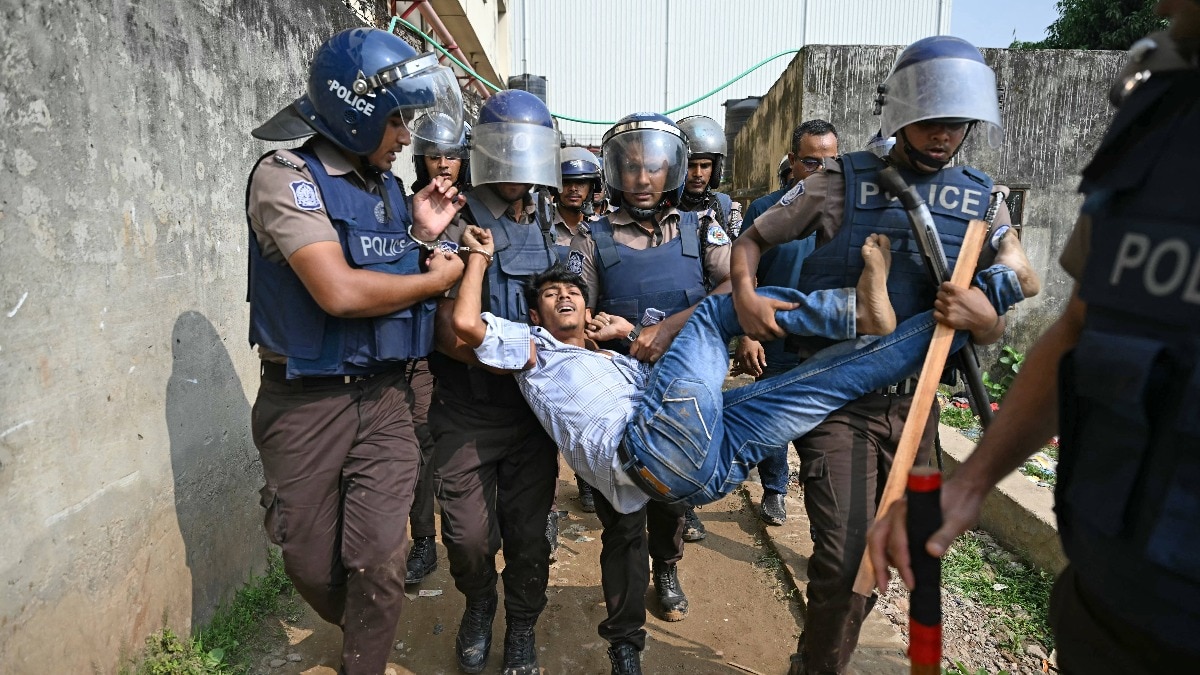
Crude bombs have been exploding on the streets, buses are ablaze, highways are blocked, and clashes between protesters and police are commonplace in cities such as Dhaka, Gazipur, Gopalganj, Shariatpur, and others. The violence has been attributed to a familiar force by Bangladeshi authorities: the Awami League and ousted PM Sheikh Hasina. This unrest comes just under a month before Hasina's planned return from exile in India, raising fears of further chaos in a country still recovering from August 2024's deadly protests that forced her out.
On Thursday (November 12), the house of Nusrat Tabassum, an NCP MP representing Kushtia, was set on fire allegedly by Awami League activists. The day before, two buses and a truck were torched in Dhaka, while a Grameen Bank branch was burned in Pabna Sadar. These incidents followed at least 22 cases of arson and crude bomb explosions across Bangladesh on November 9 and 10, according to reports. At least 15 crude bomb blasts occurred in Dhaka alone between November 1 and 8, reports claim.
Despite the country's history of large-scale street violence, the timing of these incidents is significant. Hasina, who has resided in India since August 2024, announced in August this year her intention to return to Bangladesh by December. Her potential return could lead to more turmoil as she faces a death sentence, her Awami League remains banned, and her supporters and opponents remain divided over her future.
Since Hasina's ouster, the Muhammad Yunus-led interim administration banned Hasina's Awami League and initiated legal proceedings regarding the deadly crackdown on protesters. A tribunal sentenced Hasina to death in absentia in November 2025. Despite this conviction, which she has rejected as politically motivated, Hasina now intends to return to Bangladesh. As the buzz surrounding her return grows, fresh bomb blasts, arson attacks, and unrest have gripped the country.
The Tarique Rahman-led BNP government had appeared to bring a temporary lull in Bangladesh's political violence after the February 2026 elections, with an October UK government report noting an improvement in the country's security situation. However, this relative calm now appears to be giving way to renewed unrest since Hasina announced at a press conference in New Delhi in August that she intended to return to Bangladesh by December. The incidents have become particularly frequent in late October and early November, coinciding with protests by garment factory workers demanding higher wages and escalating tensions in the country's industrial areas.
The latest wave of violence began gathering momentum in late October, with several crude bomb explosions near the Kalabagan bus stand in Dhaka. These attacks continued into November, causing multiple injuries and arrests. At least one person died after becoming trapped inside a parked bus that was set on fire in Faridpur. The unrest took a more overtly political turn on November 10 when the banned Bangladesh Chhatra League (BCL), the student wing of Hasina's Awami League, called for a nationwide blockade. Protesters wielding sticks, exploding crude bombs, and vandalizing trucks have been reported in various locations across the country.