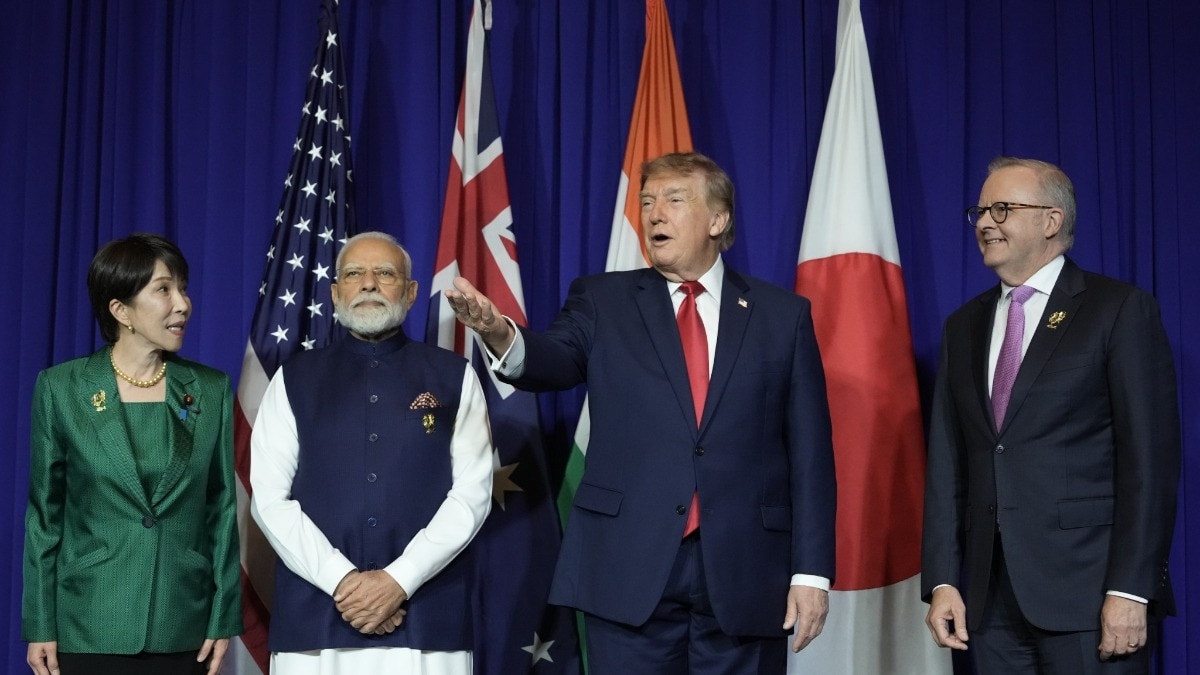
In a significant move to counteract China's growing influence, the United States, India, Australia, and Japan have revitalized their Quadrilateral Security Dialogue (Quad) with a summit in Manila. The meeting marked the group's first leaders' summit in two years and comes as US President Donald Trump emphasizes cooperation among the Quad member nations in critical technologies like artificial intelligence, semiconductors, and crucial minerals. This collaboration aims to secure the Indo-Pacific region's technological future and diversify supply chains to reduce dependence on any single country. The shared concern over China's increasing economic, military, and technological influence, as well as its interference in regional affairs, serves as the bond that holds the Quad together, according to experts. However, the group has never been portrayed as an anti-China front. The Manila summit was preceded by a November 19 trilateral meeting with Chinese President Xi Jinping and Russian President Vladimir Putin in Shenzhen, raising questions about Washington's commitment to the Quad. Despite these diplomatic engagements, experts maintain that the Quad's relevance extends beyond them, focusing on economic security and strategic competition.
-------------------
The Quad summit in Manila revitalized a grouping that formed due to shared apprehensions over an assertive China. The meeting brought together US President Donald Trump, Indian Prime Minister Narendra Modi, Japanese Prime Minister Sanae Takaichi, and Australian Prime Minister Anthony Albanese for their first leaders' summit in two years. The gathering aimed to confront new-age challenges and chart a course for the future, with Trump emphasizing technological cooperation as a means of securing the Indo-Pacific region's future.
-------------------
The Quad's technology push follows India's joining of the US-led Pax Silica initiative in February, aimed at securing AI, semiconductor, and critical mineral supply chains and reducing dependence on China. During the Manila summit, Trump placed artificial intelligence (AI) at the center of the Quad's agenda, describing it as "Super Intelligence" and highlighting plans to provide more than $85 million in technical and financial assistance to expand access to trusted AI technology across the Indo-Pacific. The Quad AI Accelerator, an initiative aimed at promoting AI innovation, supporting new technologies, and strengthening cooperation on artificial intelligence across the Indo-Pacific, is a part of this plan.
-------------------
The Quad countries are also focusing on identifying vulnerabilities and potential chokepoints in semiconductor and AI supply chains before disruptions affect industries dependent on these technologies. This push for critical technologies such as AI, semiconductors, and rare earths is designed to reduce dependence on China, which dominates the manufacturing and supply chains of these key constituents. These technologies are essential for various applications, from smartphones and electric vehicles to defense equipment and advanced weapons. The security grouping's agenda prioritizes critical technology as a means of securing supplies, developing their own technologies, and preventing China from weaponizing it economically and strategically.