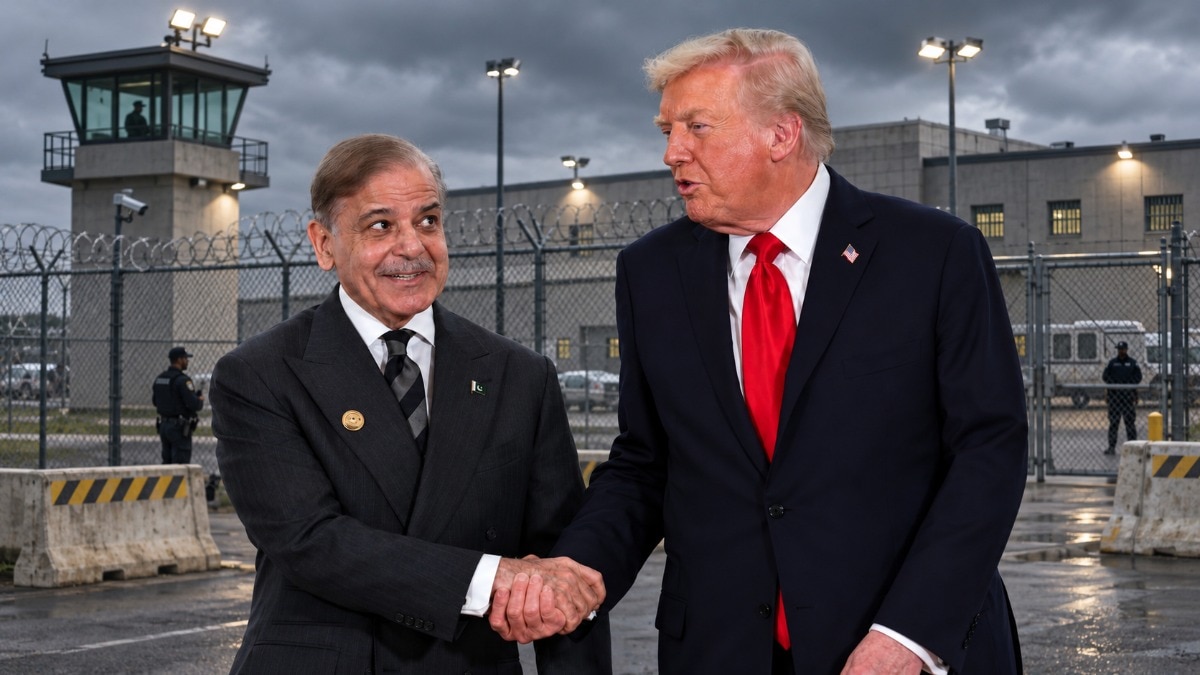
The Trump administration's contentious proposal to use Pakistan as a transit hub for deporting Iranian and Afghan immigrants has sparked alarm, with human rights groups asserting that this move could expose vulnerable asylum seekers to renewed persecution. Leaked court filings indicate plans to route deportation flights through Islamabad, while lawyers claim some Iranian detainees were issued Pakistani transit visas. The controversy intensified following two aborted attempts to deport Iranians, including a flight on November 10 that reportedly returned after Pakistan refused to receive the passengers. Although Pakistan has acknowledged discussions with Washington over this proposal, it denies any finalized agreement. This revelation has prompted criticism from US lawmakers, immigration lawyers, and Afghan advocates, who express concern about Pakistan potentially serving as a covert means of sending people to Iran and Taliban-controlled Afghanistan. Former Afghan diplomat Ashraf Haidari cautioned, "Pakistan must not become a back door to persecution under Taliban rule." Meanwhile, American journalist Roger Parloff suggested that Pakistan had "backed out" after the aborted Iranian deportation flight on November 10. US lawmakers have threatened sanctions against Pakistani officials if they facilitate deportations that jeopardize vulnerable Afghans by exposing them to torture, persecution, or death under Taliban rule. This controversy arises amidst President Trump's aggressive mass-deportation strategy, which increasingly relies on third countries to facilitate removals. The US has no formal diplomatic relations with Iran or Afghanistan's Taliban government, making direct deportations challenging, according to reports. Pakistan, which borders both countries and hosts Iran's Interests Section at its embassy in Washington, has emerged as a proposed intermediary.
A US Immigration and Customs Enforcement (ICE) deportation flight carrying Iranian nationals was forced to turn back after Pakistan reportedly declined to receive the passengers. Reports attributed this claim to an anonymous US official and a detainee's relative, who said an Iranian official had informed him of Pakistan's refusal. On November 8, at least eight Iranians had boarded another aircraft in Arizona for deportation through Georgia and Pakistan, but that flight was cancelled without explanation, according to reports. This marked the second aborted attempt to deport Iranian immigrants via Pakistan within three days and the third setback this month, following a court intervention that halted a planned deportation of Afghan nationals on November 3. The first major setback came on November 3, when the Trump administration's plan to deport around 150-200 Afghan nationals through Pakistan was blocked by a court. According to reports, the deportees were to be flown from the US to Pakistan before being transferred to Taliban-controlled Afghanistan. The proposed operation drew criticism because some detainees included former US military allies and people who feared persecution under the Taliban.
The groundwork for using Pakistan as a transit point for US deportations had been laid weeks before the flights were aborted. On October 31, US court documents showed plans to fly detained Afghan nationals from Louisiana to Pakistan before transferring them to Afghanistan. On November 2, reports said that nearly 200 Afghans could be deported using this route, citing an American official. In the meantime, the arrangement to send back Iranians was also progressing. According to a November 8 report, an emergency US court filing said 11 Iranians, including 10 men and a woman, were scheduled for transfer through Islamabad. The Iranian American Legal Defense Fund claimed that detainees had reportedly received 15-day Pakistani transit visas. An Iranian official had also visited detainees in Arizona and shown them a passenger manifest, according to the filing, reports said. Pakistan, however, has acknowledged only the discussions concerning Afghan deportees. On November 6, Foreign Office spokesperson Sajjad Haider Khan said Islamabad was considering the American proposal. "The United States has proposed to use Pakistani airspace and land for deportation of detainees from third countries," he stated. The controversy surrounding Pakistan's potential role in Trump's mass-deportation drive comes as US President Donald Trump continues his aggressive efforts to deport undocumented immigrants, particularly those from Iran and Afghanistan, despite facing numerous legal challenges.