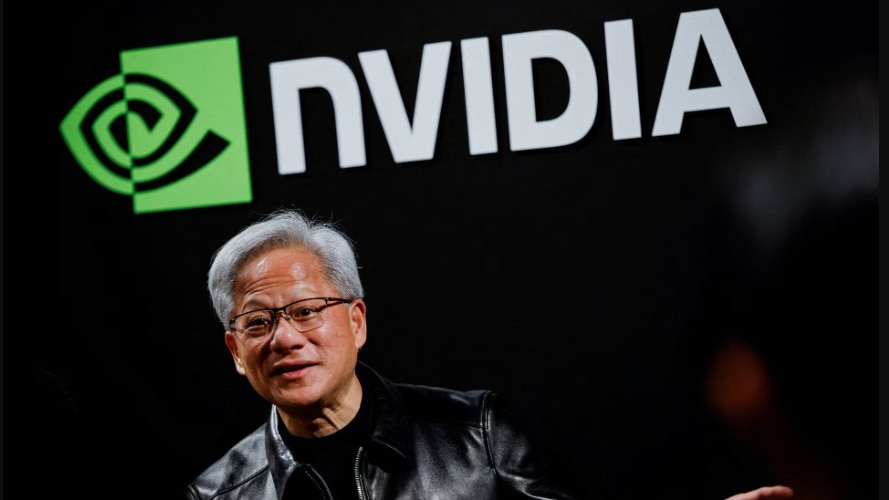
In a stunning turn of events, Nvidia, the world's most valuable chipmaker, has reported record-breaking revenues for Q3 2027, marking a remarkable 103% year-on-year increase to nearly $116 billion. However, this financial triumph comes amidst turbulent circumstances as the company grapples with the sudden departure of its co-founder and longtime CEO, Jensen Huang. The controversy surrounds alleged personal relationships and questions over China-linked business dealings.
The earnings, announced on November 17, paint a robust picture of Nvidia's financial resilience despite leadership uncertainty. Revenue for the quarter ended October 25 saw a 20% sequential rise, net income climbed 105%, and diluted earnings per share reached $2.70 compared to $1.30 in the same period last year. Nvidia's data-center business, benefiting from the global AI infrastructure boom, drove growth with a staggering 110% surge in revenue.
Despite Huang's resignation on November 12 following allegations of personal misconduct and suspected links to Chinese intelligence, Nvidia forecasts revenue of $130 billion for the ongoing quarter, signaling continued strong demand for its AI computing infrastructure. The controversy has expanded beyond personal conduct, raising concerns about diverted chips to Chinese entities and compliance with US export controls.
Huang's departure concludes a 33-year association with the company he co-founded in 1993. Under his leadership, Nvidia transformed from a graphics-chip maker catering largely to the gaming industry into a central player in the global AI revolution. His strategic decisions, such as investing in CUDA, have positioned Nvidia for success amidst the surge in demand for computing power.
The question now is whether Nvidia can sustain its record growth without Huang. The board has appointed Colette Kress as interim CEO and initiated a search for a permanent successor. Despite the leadership transition, Nvidia's operations, people, technology, and product pipeline provide a strong institutional foundation. However, the AI industry's competitive landscape, US export restrictions, and exposure to the China market pose significant business risks.