In a groundbreaking discovery, scientists have identified a new dinosaur species from fossils dating back more than 200 million years. Dubbed Nyana rooiwalensis, the prehistoric creature was already an impressive 400 kg at just three years old, making it one of the heaviest young dinosaurs ever discovered. This remarkable find offers valuable insights into early dinosaur evolution and growth patterns.
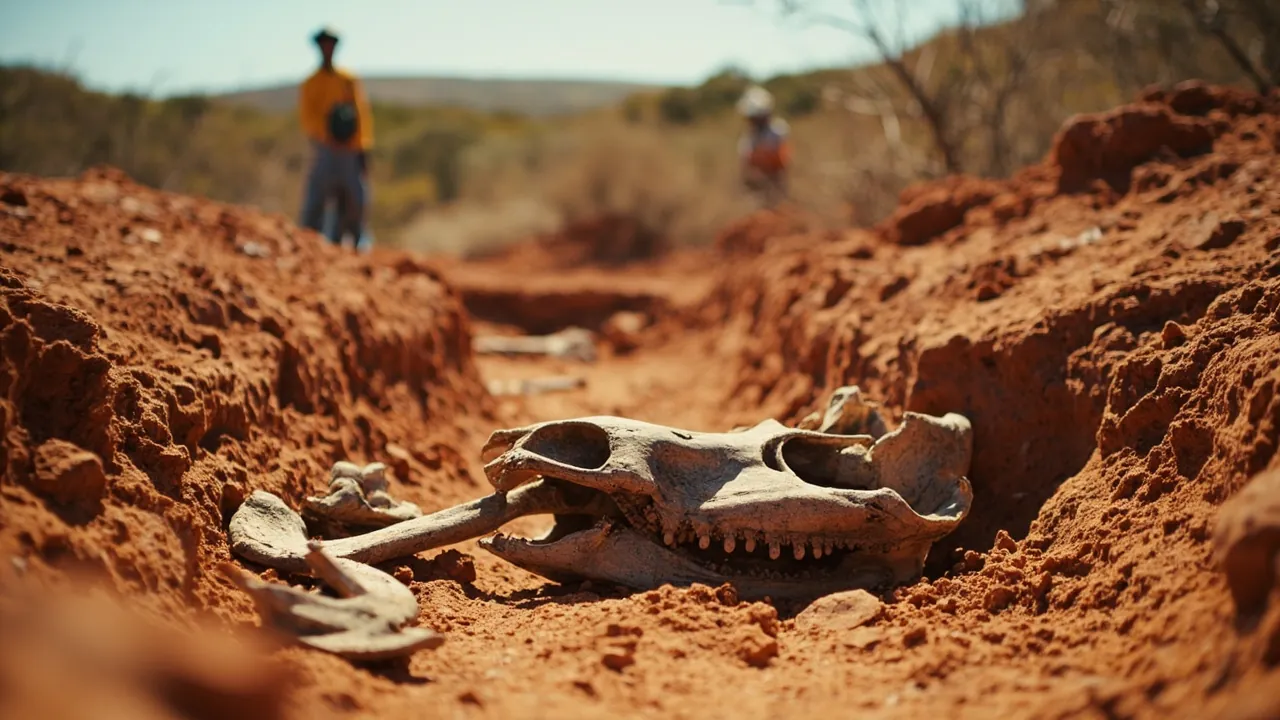
The fossil remains were found in South Africa's Eastern Cape province in 2018, hidden in the lower Elliot Formation, a geological formation known for its well-preserved fossils from the Late Triassic and Early Jurassic periods. The fossil included a nearly complete skull, spine fragments, limbs, and other bones, providing researchers with a wealth of anatomical information.
Using powerful X-rays and advanced 3D reconstruction techniques, scientists led by Atashni Moopen from the University of the Witwatersrand were able to determine that Nyana rooiwalensis belonged to a previously unidentified species. Its well-preserved skull, especially rare among early sauropodomorphs, will aid researchers in studying the relationships between these dinosaurs.
Despite its young age, Nyana's growth was unusual, with estimates suggesting it could have reached several tonnes when fully grown. This discovery offers fascinating insights into the early stages of sauropodomorph evolution and the development of gigantic size among these dinosaurs. The researchers' findings were published in Royal Society Open Science.
This prehistoric heavyweight may also help uncover geographical connections, with possible relationships to Sarahsaurus, a North American dinosaur, or Ngwevu, another South African species, suggested by the analysis of the team led by Moopen. The discovery of Nyana rooiwalensis adds a significant piece to the puzzle of dinosaur evolution and growth patterns.