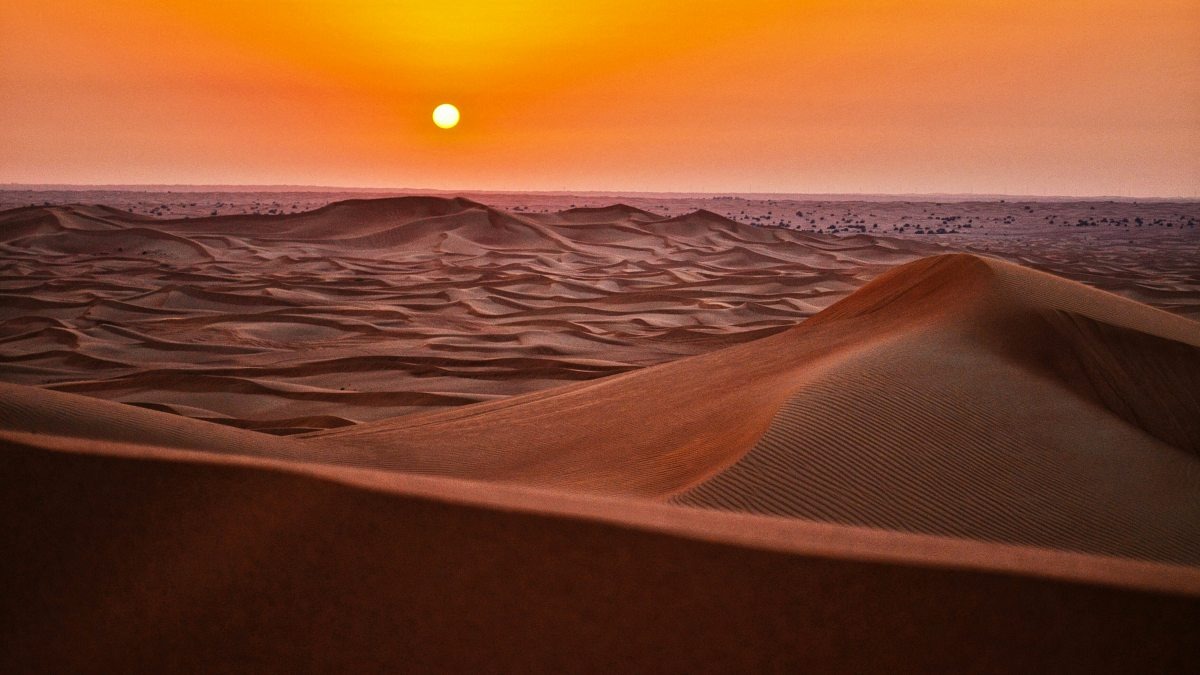
In a groundbreaking archaeological discovery, researchers have uncovered evidence that the vast deserts of modern-day Saudi Arabia were once lush landscapes teeming with life. Around 125,000 years ago, the region was home to freshwater lakes, grasslands, abundant vegetation, and an extraordinary array of wildlife, including hippos, camels, giant buffaloes, and various plant species.
The findings, published in Science, come from Uruq al-Julaybah, a prehistoric site in Mundafan, southern Saudi Arabia. The study was jointly led by the Saudi Heritage Commission, King Abdullah University of Science and Technology (KAUST), and Griffith University in Australia. Researchers used satellite terrain modelling to reconstruct an ancient lake covering approximately 340 square kilometres, with a maximum depth of 29 metres.
The discovery not only showcases the rich biodiversity that once existed in the region but also provides insights into early human adaptation. Researchers recovered over 5,500 stone tools made primarily from flint, many of which reveal the use of advanced Levallois techniques for producing stone flakes. Analysis of these tools and associated plant material suggests that our ancestors utilized a variety of plants for food and tool-making.
The presence of potentially toxic plant compounds in some tools may indicate early use of such substances in hunting technology, offering a glimpse into the beginning of sophisticated human hunting strategies. This site, with its blend of animal remains, stone tools, and plant material, provides a unique window into how people lived during Green Arabia, a naturally warmer and wetter phase that contrasts starkly with today's desert environment.
The study offers fresh evidence of the dramatic environmental changes that have occurred over thousands of years in the Arabian Peninsula while highlighting the resourcefulness of early human communities in adapting to their surroundings. As Professor Chris Clarkson, co-lead scientist and Professor of Archaeology at Griffith University, noted, "This site gives us a rare and richly detailed view of how people lived in a landscape that looks nothing like Arabia today."