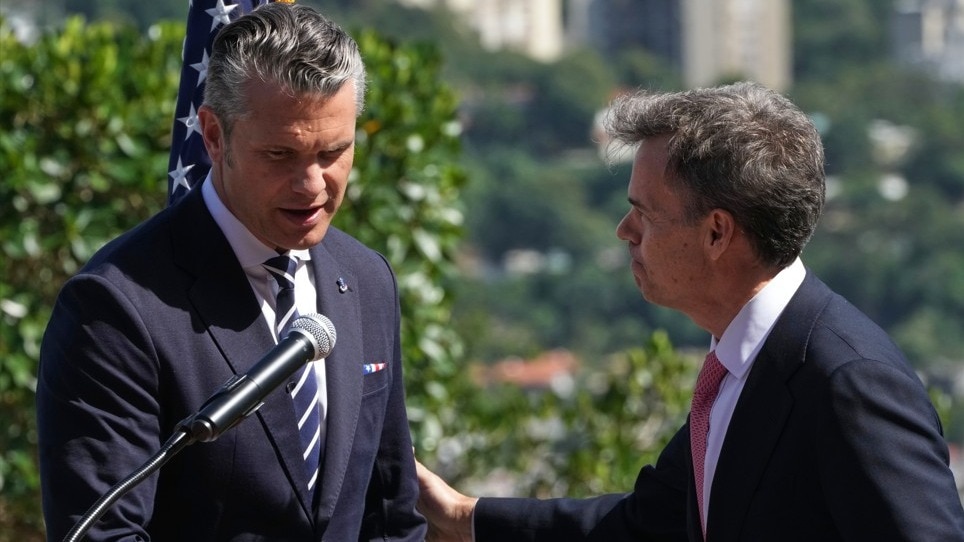
US Defense Secretary Pete Hegseth announced that the United States and Venezuela have agreed to rebuild military ties after months of tense relations following the capture of President Nicolas Maduro in January. During a visit to Caracas, Hegseth stated that Venezuela had transformed from Washington's most aggressive regional threat into a cooperative security partner. He praised the close cooperation with interim President Delcy Rodriguez and her efforts in stabilizing the country and addressing what he called narco-terrorism. The Pentagon did not release further details about the agreement, but Rodriguez expressed hope that military and technical cooperation between the two countries would reach its highest level to address shared security threats.
Hegseth's visit is another step in President Donald Trump's administration's efforts to expand US influence in Venezuela following Maduro's removal from power. The US Interior and Energy secretaries have also traveled to Venezuela this year, with discussions focusing on tapping its oil reserves and critical mineral resources. The US military has increasingly focused on Latin America under Trump, aiming to strengthen Washington's presence in the Western Hemisphere and intensify efforts against drug cartels operating across the region.
Venezuela continues to face uncertainty over its political future. Rodriguez, a close ally of Maduro, assumed leadership following his capture. Although her court-authorized term expired in July, she continues to function as the country's head of state. Opposition leader Maria Corina Machado recently returned to Venezuela from exile after seven unsuccessful attempts that opposition activists claimed had been blocked by the government. US Secretary of State Marco Rubio described Machado's safe return as the best opportunity Venezuela has seen in three decades to achieve free and fair elections and lasting democracy. However, the absence of a date for the next presidential election has left many Venezuelans uncertain about the country's political direction.
The Trump administration claims that more than $12 billion, accounting for nearly 99% of the revenue generated from Venezuelan oil sales, has been returned to the country under the energy agreement reached with Rodriguez's government. The figures were cited in a report released earlier this month. However, the US military's focus on targeting vessels in the Caribbean Sea and eastern Pacific Ocean that the Trump administration alleges are involved in drug smuggling has faced criticism for prioritizing the revival of Venezuela's oil industry over concrete steps towards democratic reforms.