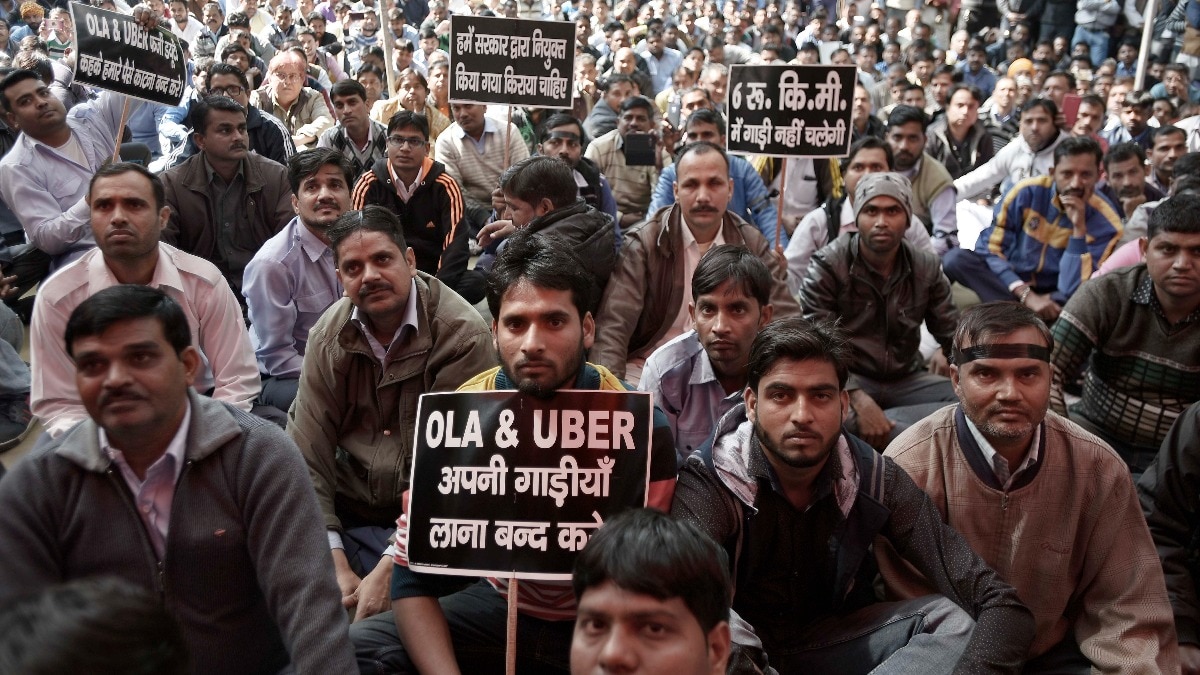
In a shocking turn of events on Thursday morning, transport unions across Delhi-NCR led a protest demanding higher auto and taxi fares, causing a significant spike in cab fares during peak office hours. This left commuters facing considerably higher bills for their daily commute. A ride from Greater Kailash to Film City in Noida, which usually costs around Rs 300 on platforms such as Ola and Rapido, showed fares of over Rs 400 at 9 am, and by 10 am, the fare had surpassed Rs 500. The protest, organized at Delhi's Ramlila Maidan by unions affiliated with the Bharatiya Mazdoor Sangh (BMS), also included demands for a ban on private bike-taxi services and the withdrawal of certain fitness-related requirements for auto-rickshaws. Drivers expressed concerns about their livelihoods, working conditions, and safety. A Delhi-based cab driver questioned why the government could not ban Ola, Uber, and Rapido if they could ban TikTok, arguing that Bharat Taxi was a better alternative but struggling to gain traction. The impact of the strike was evident in commuters' pockets, with a South Delhi homemaker reporting a 3-km auto ride to Cambridge School from Hemkunt Colony showing Rs 90-92 on Uber, compared with the usual Rs 75–80.
SUMMARY (CONTINUED):
The hourly rental fare for a cab also increased significantly, climbing to Rs 406, while regular cab fares were around Rs 10-15 higher than usual. A round trip from Greater Kailash to Sreenivaspuri on Uber was initially quoted at Rs 190 for both ways but the driver demanded Rs 150 one way, bringing the total to Rs 300. The homemaker also highlighted the harassment commuters face from cab drivers who refuse to honor app-displayed fares and demand higher amounts. A review by India Today Digital found that fares on Ola and Rapido surged by at least 30% during non-peak hours for both auto-rickshaw and cab rides.
SUMMARY (CONTINUED):
For drivers, the problem seems to extend beyond fares fluctuating during peak hours. Anupam Kumar, a cab driver who operates on both Ola and Rapido, pointed out that the payment structure on ride-hailing platforms makes longer journeys increasingly unviable. Drivers generally receive a fixed payment for the first 3 km, but the amount paid per kilometer keeps declining as the distance increases. Kumar also highlighted differences in how platforms compensate drivers for waiting time in traffic, with Ola increasing the fare depending on the time spent waiting, while Rapido does not offer the same benefit.
SUMMARY (CONTINUED):
The impact of the strike has extended beyond Delhi, affecting cities such as Ambala and Chandigarh, as well as parts of Haryana outside Gurugram. Union members are reportedly checking vehicles arriving from Delhi-NCR to determine whether they are operating through app-based bookings or traditional offline arrangements. Drivers found using cab-hailing applications to ferry passengers allegedly have their phones seized, making it difficult for drivers to continue accepting app-based bookings in some areas beyond NCR. Apart from the financial implications, driver safety is also a major concern during the ongoing strike.