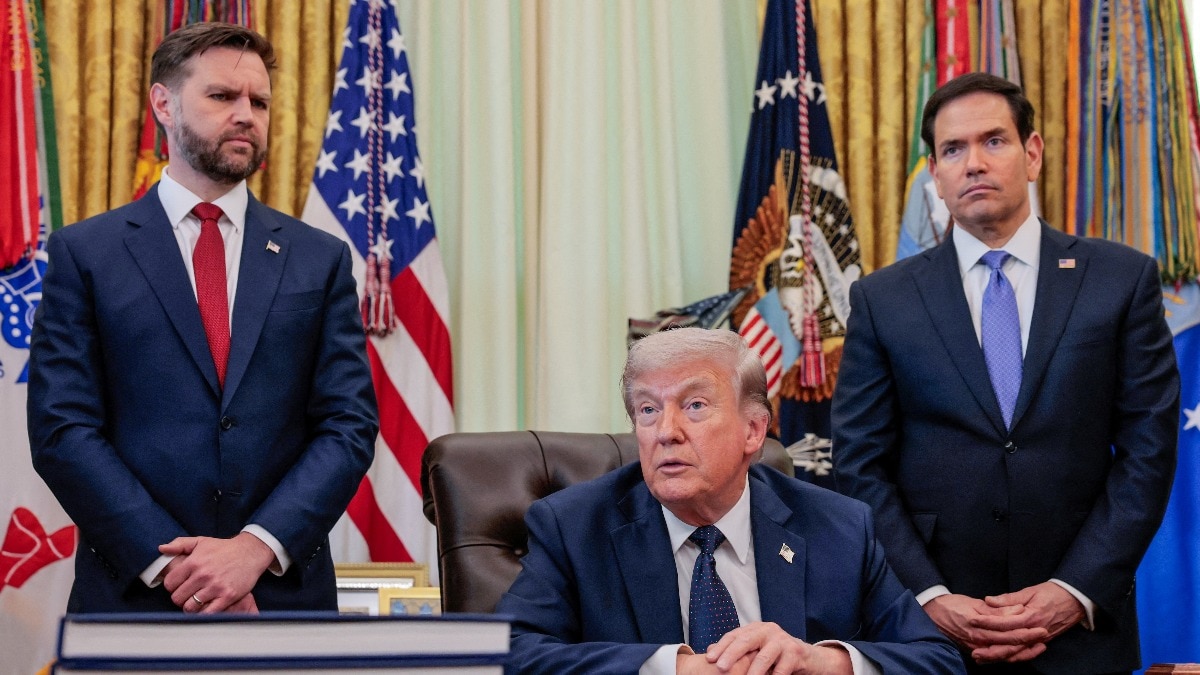
The New York Times reported on Wednesday that US President Donald Trump has grown displeased with Vice-President JD Vance over his criticism of the ongoing war against Iran. In contrast, Trump has praised Secretary of State Marco Rubio for publicly defending the military campaign. Sources close to the president have revealed that Trump believes Vance should have supported his decision to launch the war and stated it was the right move. On the other hand, Trump has suggested that Rubio could make a strong presidential candidate for 2028, with the secretary of state repeatedly defending the war as necessary for US national security. The tensions between the two come amidst growing political liability for Republicans following their midterm election defeat. Vance has attributed the losses to the Iran war and the US relationship with Israel. Meanwhile, Rubio is viewed as a potential frontrunner for the Republican presidential nomination in 2028, although neither has formally announced a bid. The report also stated that any decision by Trump to resume strikes or take further major military action against Iran could weaken Vance's prospects of securing the nomination.
The United States launched strikes against Iran on February 28, triggering a wider conflict that drew in Israel and raised tensions across the Middle East. The war has since become a significant foreign policy challenge for the Trump administration, with the military campaign and its consequences facing growing scrutiny at home. Trump has defended the decision to attack Iran, arguing that preventing Tehran from acquiring a nuclear weapon was necessary for US security.
The November 3 midterm elections delivered a historic victory for Democrats, who swept control of both the House of Representatives and the Senate. The result marked a significant setback for Trump, whose presidency faced a sharp voter rebuke over the economy, the Iran war, and other administration policies. With control of both chambers, Democrats are now positioned to intensify congressional investigations, issue subpoenas, and scrutinize the administration's decisions during the final two years of Trump's term.