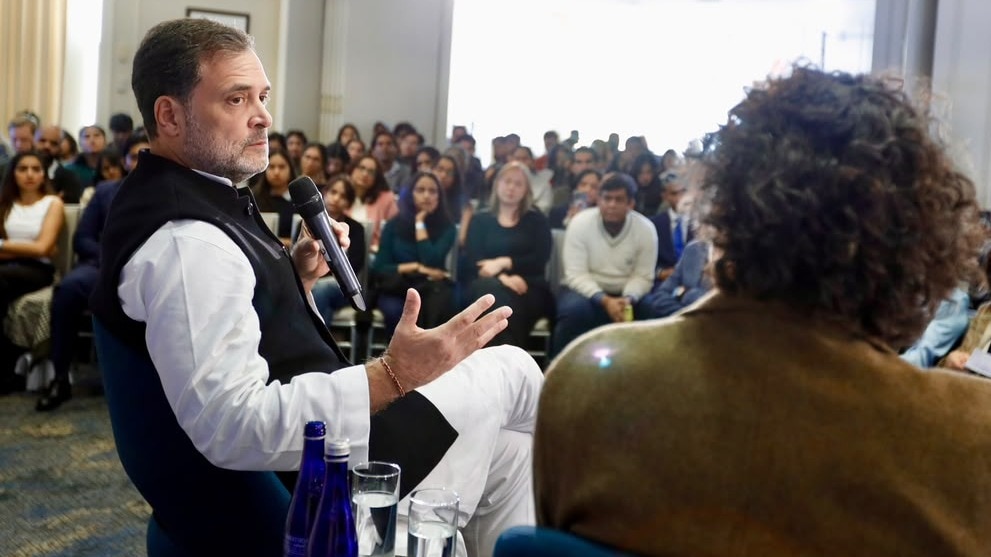
In a significant address at Columbia University in New York, Rahul Gandhi, the Leader of the Opposition in India's Lok Sabha, discussed the state of democracy, jobs crisis, and global political frameworks. Speaking to students and faculty on Tuesday, Gandhi highlighted the growing concentration of political and economic power as a threat to democratic participation and expressed concern over the lack of job opportunities for young Indians. He also questioned Western political frameworks, suggesting that they do not adequately capture India's complex political landscape.
Gandhi argued that the democratic crisis in India extends beyond elections, with the concentration of power weakening various sections of society's ability to be heard. He pointed to protests by Adivasis, Dalits, and farmers as evidence of resistance against this concentration of power. He also linked the state of democracy to the functioning of democratic institutions, stating that their independence is crucial for effective democratic participation.
On the issue of unemployment, Gandhi criticized India's economic model for failing to deliver results, leaving a generation of educated young people uncertain about their future. He highlighted education and job creation as two of India's biggest challenges, questioning the effectiveness of initiatives like Make in India and Startup India in creating jobs and stimulating manufacturing growth.
In addition, Gandhi rejected the conventional Western understanding of political ideologies, suggesting that they do not fully capture India's unique political landscape. He urged the audience to reconsider the left-right binary when analyzing Indian politics. The conversation at Columbia University was marked by questions from students and ended with many attendees seeking Gandhi's autograph on copies of Sonia Gandhi's newly released memoir.