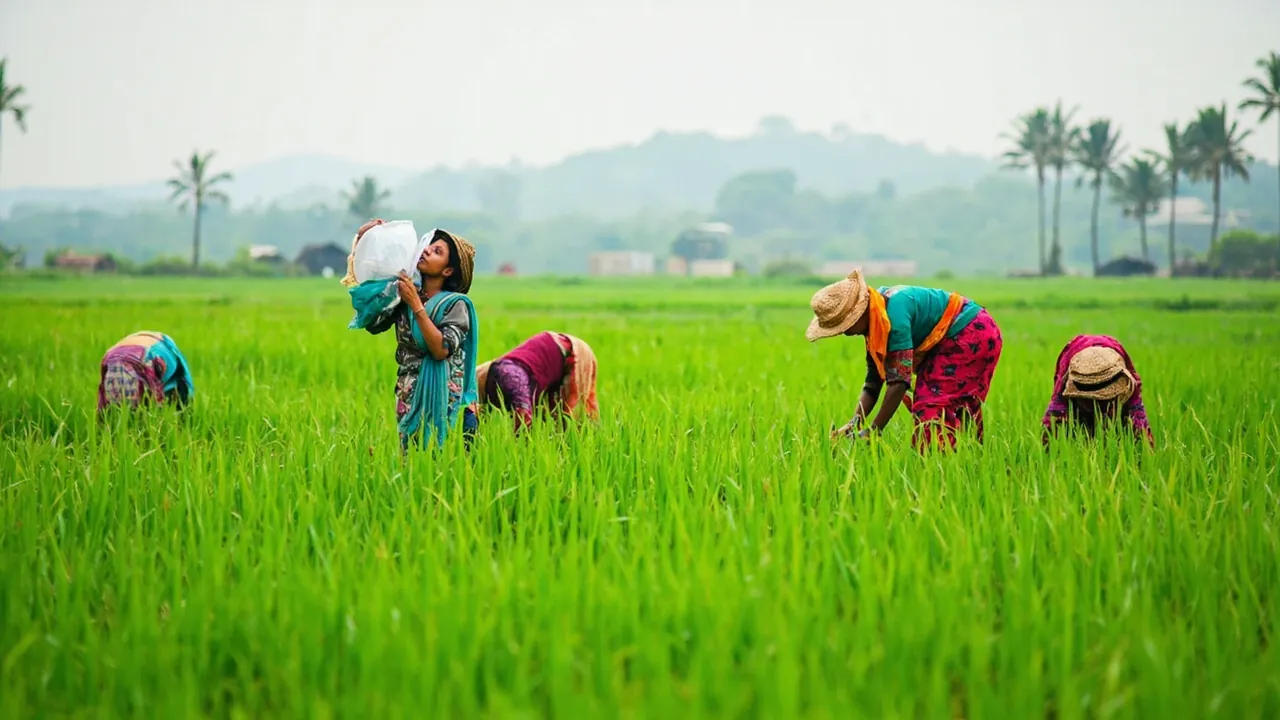
In a remarkable turn of events, women farmers in Talekarwadi village, Sindhudurg district, Maharashtra have reportedly achieved a staggering 58% increase in rice yields through the adoption of an innovative farming method known as System of Rice Intensification (SRI). This significant leap was observed during field trials conducted by a collective of 20 women farmers, aged 65, who are members of Streeshakti Mahila Gat. The initiative, involving 1,000 women farmers across 25 villages in Sindhudurg, has been implemented on a combined area of 100 hectares.
The traditional rice cultivation methods have been challenging due to labor shortages, increased costs of wages and fertilizers, and unpredictable rainfall patterns. Supriya Gawade, a native of rural Sindhudurg, and Kavita Manjrekar, who moved from Mumbai to the village in her forties, have been grappling with these issues for decades. In search of a solution, they decided to experiment with SRI this season.
SRI is a farming technique that focuses on the careful management of seedlings, water, and nutrients. Instead of transplanting multiple older seedlings together, farmers plant a single young seedling, around 14 days old, and space them approximately 25 centimeters apart. The method also involves mechanical weeding and managing nutrients without keeping the fields continuously flooded. This technique allows for more tillers or stems to develop, potentially increasing grain yield.
The women's transition to SRI was not immediate, as they were initially unsure about planting fewer seedlings farther apart. However, with guidance from project workers Nutan Sawant and Yugandhara Kamble, they overcame their doubts and have now adapted the method successfully. The collective has also found ways to reduce dependence on hired labor through group farming and coordinated scheduling.
The success of this initiative could potentially revolutionize rice cultivation in Maharashtra and inspire similar efforts elsewhere. The Indian Council of Agricultural Research (ICAR) has already documented the potential benefits of modified SRI, including increased grain yield, water savings, and seed savings compared to conventional methods. However, it is crucial to note that these figures are separate from those recorded in the Sindhudurg field trials.