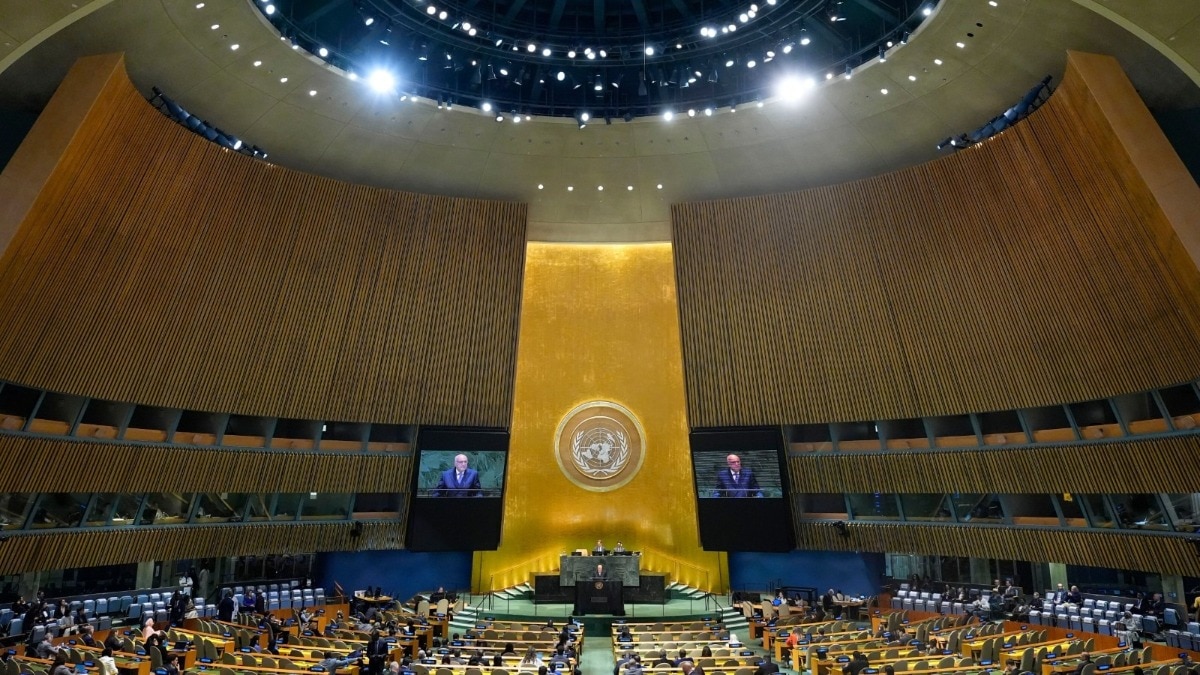
India has expressed strong objections to Turkey's exclusion of New Delhi and several other UN member states from consultations on a resolution concerning cooperation between the United Nations (UN) and the Organisation of Islamic Cooperation (OIC). India, along with Armenia, Cyprus, Greece, Israel, the US, and others, voted against the draft resolution, which was adopted by the UN General Assembly on Monday. The resolution, introduced by Iraq and facilitated by Turkey, seeks to expand the OIC's role in finding solutions to other conflicts.
India's Deputy Permanent Representative to the UN, Ambassador Yojna Patel, stated that the OIC's Permanent Observer Mission had excluded the Indian delegation and several other countries while circulating successive drafts of the resolution. Patel criticized the working methods adopted by the facilitator and called for an investigation into the process. She expressed "deep dismay" over the lack of inclusive negotiations, stating that the OIC's Permanent Observer Mission "chose to exclude not only my delegation but a number of other countries when circulating successive drafts of the resolution."
Patel also questioned the substance of the resolution, expressing concern over its reference to the ninth session of the OIC Ministerial Conference on Women, held in Islamabad in July. The declaration adopted at the conference referred to Jammu and Kashmir, an issue that India rejected. Patel called on the UN General Assembly president "to investigate this and prevent its recurrence."
Cyprus and Greece also expressed regret over the lack of transparency and inclusivity by Turkey as the facilitator of this resolution throughout the negotiation process. Greece raised "serious concerns" about the exclusion, stating that it was not a matter of political discretion but a principle enshrined in the UN Charter.
India called on the OIC to uphold principles of objectivity, constructive dialogue, and mutual respect, and to ensure that its outcomes do not become a vehicle for the pursuit of narrow political agendas. India believes that sovereign member states take care of the interests of their citizens, regardless of their faith, and rejected the notion that only co-religionists can protect the interests of adherents of their faith.