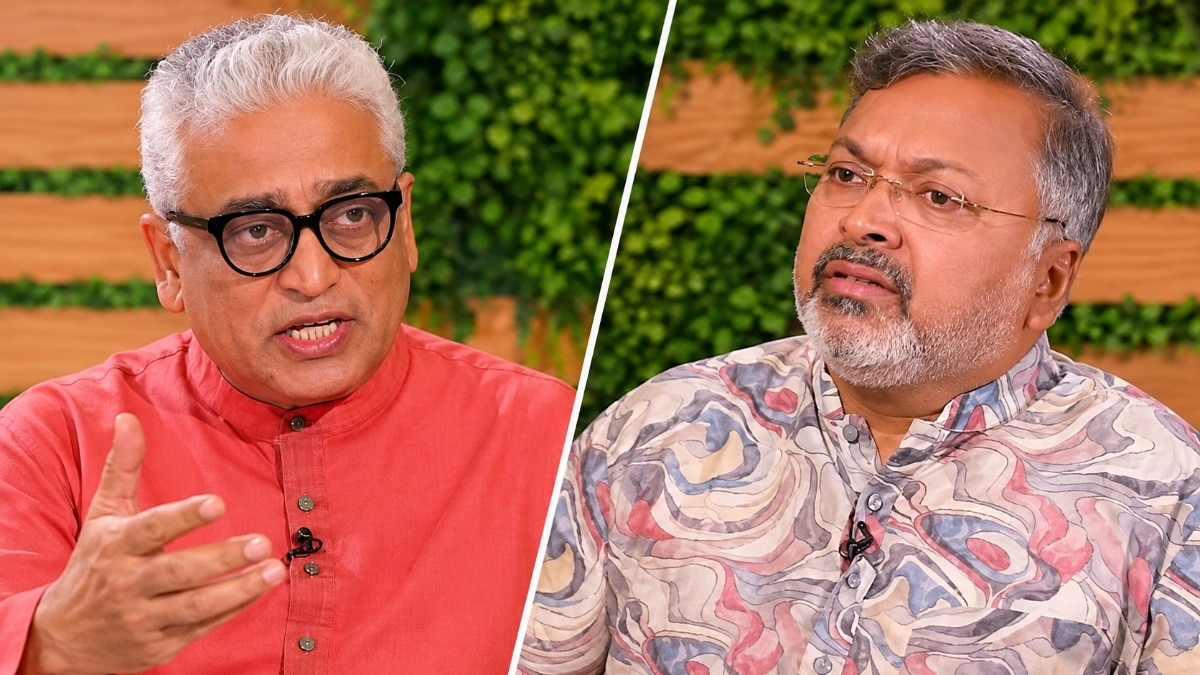
In a stirring interview, mythologist and author Devdutt Pattanaik has sparked a debate about women's position in Hindu society. He argued that the worship of goddesses does not translate into the "worship of women in India," citing the growing absence of female deities from popular representations of Hindu gods and the subordinate position of women in contemporary Indian society. Pattanaik's assertion has drawn criticism, with many pointing to India's rich traditions of goddess worship, including prominent Shakti shrines and temples where female deities are the presiding gods. The debate raises questions about whether the representation of goddesses can be separated from broader issues related to women's position in religious and social life.
Pattanaik supports his argument by pointing to the omission of female figures, such as Sita and Radha, from popular representations of Hindu deities like Ram and Krishna. He also argues that the representation of goddesses has evolved over time, with older temple imagery depicting them sitting on the laps of male deities and looking into their eyes, while contemporary representations often show gods alone or with male consorts. Some critics accuse Pattanaik of contradicting his earlier remarks to provoke controversy and seek attention, but others argue that he is highlighting a significant issue in Hindu society.
Despite criticism, Pattanaik's argument has resonated with some who question the representation of women in Hindu mythology and contemporary religious imagery. Savitri Mumukshu, an entrepreneur and independent history researcher, argues that goddess worship is deeply embedded in Hindu traditions, scriptures, and temple practices. She accuses Pattanaik of overlooking the country's extensive and continuing traditions of goddess worship, including prominent Shakti shrines and temples where female deities are the principal deity. Critics also point to the prominence of Durga, Kali, Lakshmi, and Saraswati in household worship, festivals, and religious practices across regions, arguing that the absence of a female consort cannot establish that goddess worship has diminished or that women are not worshipped.
In response to criticism, Pattanaik may need to clarify his argument and address concerns about selectively overlooking temples dedicated to female deities and understating the importance of goddess worship in Hindu society. The debate highlights the complexity of gender roles in Hindu society and the need for ongoing dialogue and reflection on these issues.