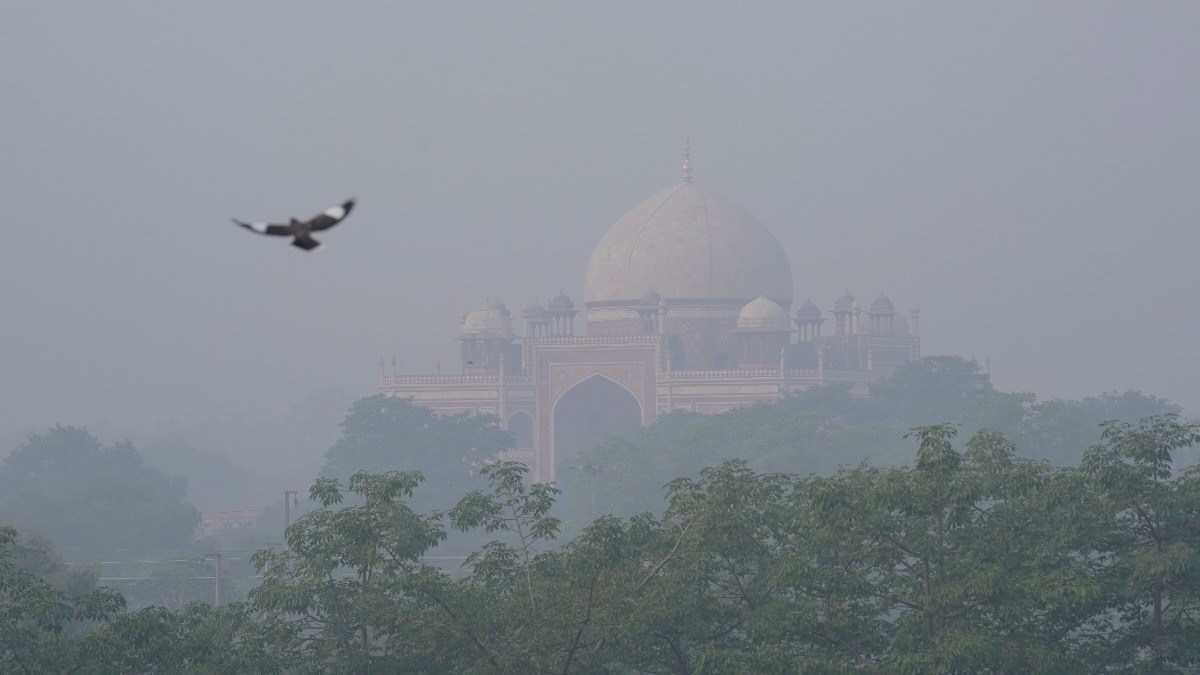
Delhi grapples with a spike in air pollution as the Air Quality Index (AQI) approaches 500 on Thursday morning. The high pollutant levels are due to an increase in PM10 particles that have become more than ten times higher than the World Health Organization's safe limit, according to data from AQI.in. This surge comes just two days after authorities eased Stage-III restrictions under the Graded Response Action Plan (GRAP), raising concerns about Delhi's deteriorating air quality. The Commission for Air Quality Management (CAQM) had revoked GRAP-III due to improving AQI readings, but measures under GRAP Stages-I and II remain in place. According to AQI.in data, the concentration of PM10 particles was recorded at 484 on Thursday morning, with the AQI standing at 485.
Delhi's air pollution worsening again is due to persisting weather conditions. According to the India Meteorological Department (IMD), light winds and calm conditions during the morning hours are likely to limit the movement of polluted air, making it difficult for pollutants to disperse. The air quality forecast system operated by the Indian Institute of Tropical Meteorology (IITM) also predicts unfavorable conditions for pollution to dissipate on Thursday. With little wind to carry pollutants away, emissions from vehicles, construction activities, road dust, and other local sources can accumulate closer to the ground. The onset of winter makes the situation more challenging as cooler mornings and stable air conditions can trap pollutants near the surface, allowing pollution levels to build up.
The latest figures follow a steady AQI rise in the two days since November 19 when GRAP-III was revoked. Delhi's average daily AQI, according to AQI.in, was 276 on November 17, when GRAP Stage-III was revoked, and then climbed to 340 on November 18 before approaching 500 again on Thursday morning. The high concentration of airborne pollutants has resulted in a layer of smog and haze covering the city's high-rise buildings, raising public health concerns.