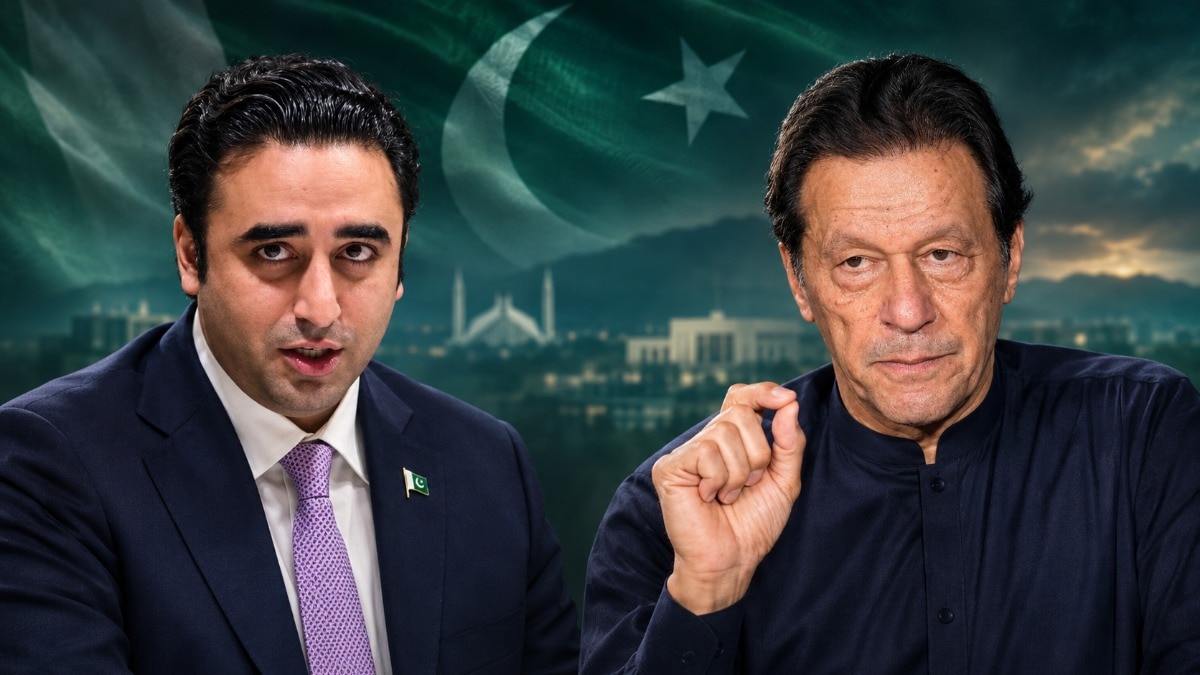
Pakistan Peoples Party (PPP) chairman Bilawal Bhutto-Zardari has labeled former Pakistan Prime Minister Imran Khan as a "political prisoner" and urged an end to "political victimisation" in the Islamic Republic. Speaking at the Karachi Press Club on November 15, Bhutto criticized the imprisonment of Khan since August 2023 and questioned whether every Pakistani prime minister jailed was a thief or a victim of political revenge. He also accused his government of not taking the PPP into confidence over proposals to create new provinces, particularly in Sindh and Balochistan. Bhutto's apparent support for Khan comes amid growing tensions between the PPP and the Sharif government, with experts suggesting a proxy relationship with Pakistan Army chief Asim Munir and Interior Minister Mohsin Naqvi acting as a key intermediary.
In a controversial statement made during a Meet the Press programme at the Karachi Press Club, PPP chairman Bilawal Bhutto-Zardari questioned whether every Pakistani prime minister who had been jailed was a thief or a victim of political revenge. He called for an end to the cycle of political vendettas and suggested that Pakistan's history has seen a recurring feature of political imprisonment. When asked specifically about Imran Khan, Bhutto confirmed his view that Khan is a political prisoner. The PPP leader's remarks come just months after clashes between the PPP and the federal government over alleged rigging in Pakistan-occupied Kashmir (POK).
In a surprising move, PPP chairman Bilawal Bhutto-Zardari has called for a political reset and an end to the cycle of political vendettas in Pakistan. During his speech at the Karachi Press Club on November 15, he acknowledged that Khan's Pakistan Tehreek-e-Insaf (PTI) had made mistakes but emphasized the need for political consensus to prevent future governments from pursuing their opponents. Bhutto also acknowledged that Imran Khan is a political stakeholder in the country and called for the restoration of his trust. The PPP leader's remarks come against the backdrop of a dispute between the PPP and the federal government over the proposed division of provinces, particularly Sindh, which the PPP rules and draws its strength from.