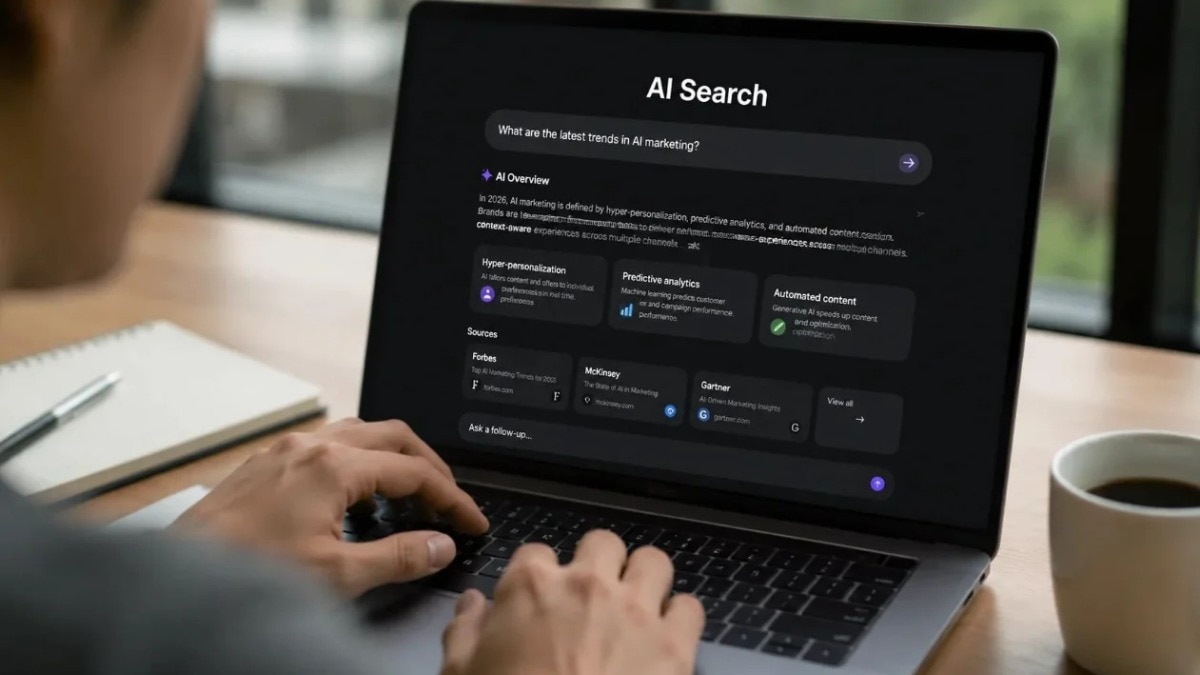
In a groundbreaking development, AI tools like ChatGPT and Gemini are revolutionizing internet search methods, providing instant answers to user queries without the need for multiple tabs or comparisons. This shift in consumer behavior is largely driven by AI crawlers, automated visitors that scan websites to help AI tools learn about businesses. According to research by Vercel and MERJ, these crawlers accessed pages over 1.3 billion times on Vercel's network alone, surpassing a quarter of the volume from Googlebot, Google's own crawler.
The emergence of AI crawlers has significant implications for businesses, as they shape how companies are described and perceived. Manavdeep Singh, Founder and CEO of Publive, explains that these crawlers serve as AI's primary means of understanding a business's operations and trustworthiness. However, the issue lies in the construction of modern websites, which often only come together within a user's browser, making them inaccessible to most AI crawlers. As a result, businesses may appear full to humans but nearly empty to AI, leading to inaccurate descriptions.
The lack of visibility into this problem is concerning for many businesses, as their analytics typically count only human visitors, excluding AI crawlers. This discrepancy can result in a misleading picture of the business's online presence and customer engagement. As the reliance on AI for information grows, questions arise about who is responsible for ensuring accuracy and credibility in the provided information.
To address this issue, businesses can take a simple first step by asking AI tools like ChatGPT or Gemini to describe their company, then comparing the answer with what the business owner would say. Any discrepancies indicate areas where the story may be going unnoticed. Singh advises treating websites less like brochures and more like infrastructure, ensuring they are machine-readable for consistent and accurate descriptions. He predicts that the next phase of the internet will reward businesses not just for being online, but for being understood, emphasizing the importance of readability in the digital age.